

Introduction
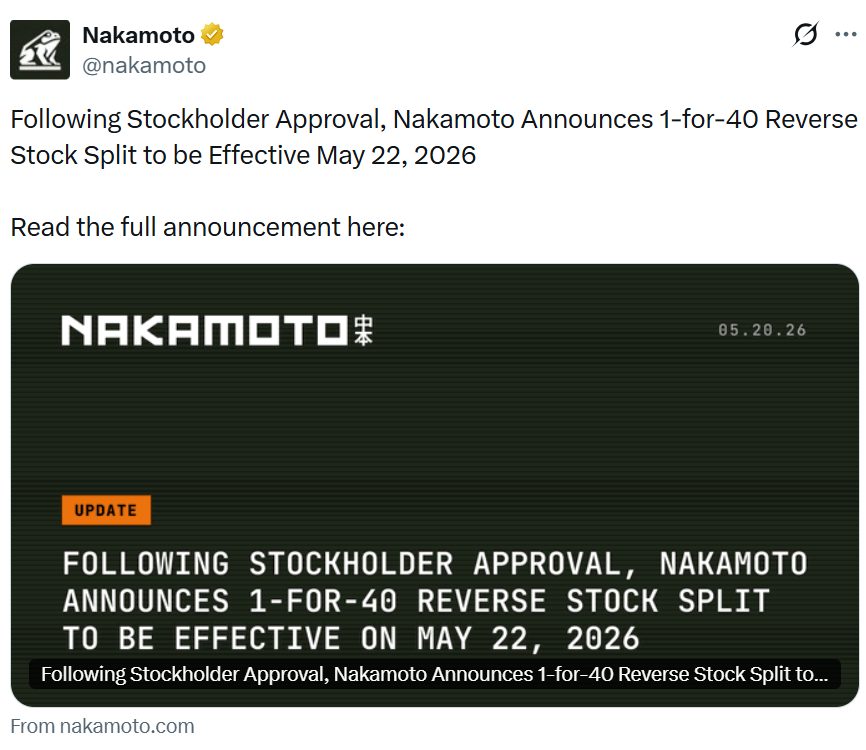
Nakamoto, a Bitcoin treasury company, is set to enact a 1-for-40 reverse stock split on Friday. This decision comes as a response to the company's stock price, which has plummeted to 16 cents, down over 99% from its peak of $25 in May last year. The reverse stock split aims to boost the share price and avoid delisting from the Nasdaq Stock Exchange, which mandates that stocks maintain a minimum price of $1.
The Mechanics of a Reverse Stock Split
A reverse stock split consolidates the number of outstanding shares, increasing the per-share price. In Nakamoto's case, every 40 shares will be combined into one, reducing the total number of shares from 696.1 million to 17.4 million. This strategic move is intended to comply with Nasdaq's listing requirements.
Nasdaq's Warning and Compliance
On December 10, Nakamoto received a notice from Nasdaq indicating that its stock price had fallen below the $1 minimum for 30 consecutive business days. The company must address this issue by June 8 to maintain its listing. The reverse stock split is a critical step in regaining compliance with Nasdaq's regulations.
The Current State of Bitcoin Treasury Companies
The landscape for Bitcoin treasury companies has been challenging, with many experiencing significant declines in stock prices. According to a report by Standard Chartered, these companies have struggled since 2025, with stock values often falling below the actual value of their Bitcoin holdings. The market dynamics have prompted discussions about mergers and consolidations among treasury companies to survive.
Nakamoto's Financial Performance
In its first-quarter financial results, Nakamoto reported a staggering 500% increase in revenue quarter-over-quarter. However, this was overshadowed by a net loss of $238.8 million, primarily due to a mark-to-market loss on its Bitcoin treasury. During this quarter, Nakamoto did not purchase any Bitcoin but sold 284 Bitcoin to cover operational expenses.

Key Takeaways
- Nakamoto's stock is down over 99% from its peak.
- The company is implementing a 1-for-40 reverse stock split.
- Nasdaq requires stocks to maintain a minimum price of $1.
- Many Bitcoin treasury companies are facing financial difficulties.
- Nakamoto reported a significant net loss despite increased revenue.
FAQ
What is a reverse stock split?
A reverse stock split is a corporate action where a company reduces the number of its outstanding shares, increasing the share price proportionally.
Why is Nakamoto enacting a reverse stock split?
Nakamoto is enacting a reverse stock split to boost its share price above the $1 minimum required by Nasdaq to avoid delisting.
What are the implications of a delisting?
Delisting from Nasdaq can significantly reduce a company's visibility and access to capital markets, impacting its overall valuation and investor confidence.
Sources
For more information, visit the original article on Cointelegraph.